Wake Forest Athletics
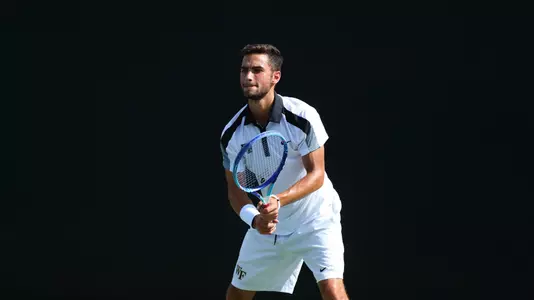
Former Deacon Tennis Player Noah Rubin Shines Light on Mental Health Among Athletes
1/20/2020 10:42:00 AM | General, Men's Tennis, Les Johns
Mental health, illness, loneliness, injuries and depression are common themes tackled in the more than 100 posts on the Behind the Racquet Instagram feed, largely written by professional tennis players.
The authors also share a deep and profound love for the sport of tennis, but believe change should be enacted to improve the product and deliver a better life experience for those on the professional circuit.
Former Wake Forest tennis player Noah Rubin started this movement.
"I'm not doing this for myself," Rubin said. "It's not about the spotlight being on Noah Rubin, it's about Behind the Racquet. I'm trying to shed light on certain aspects all of us are dealing with. I'm happy it's picking up momentum and gaining steam. I think this can really make an impact."
Rubin wore the Old Gold and Black just one season (2014-15), becoming the first player to win both ACC Player of the Year and ACC Freshman of the Year in the same campaign. He turned pro after the season.
"I always felt a sense of responsibility, because I love the sport so dearly, but I knew there were some underlying issues," he said. "I always felt like I would make an impact on the sport and to help it grow. I see tennis dying out now and having some real issues. I want to get people to rally around the concept that we can evolve the sport into something better."
Rubin takes many of the photos for the Instagram page personally, with the subjects' face behind their extended tennis racquet.
"I love photography, so I want the highest quality pictures I can have," Rubin said.
Along with each photo comes a personal story from the tennis professional pictured.
"What he's doing with Behind the Racquet gives a platform to players to speak out and share their experiences," said Petros Chrysochos, who turned pro after graduating from Wake Forest last spring. "What he's doing is great because it's giving players a voice who wouldn't normally have one. Everybody has a story, and everybody has something to say. They just didn't have a platform."
In addition to the catharsis that comes with a shared experience, Rubin hopes the game of tennis can begin to evolve as these matters are illuminated.
"Some of the issues that lead to the problems of loneliness and depression — we need shorter schedules and more team play," Rubin said. "We need a salary that will allow us to play tennis without worrying about how we'll be able to afford a coach, pay for travel — can I even afford to play the sport of tennis?"
Rubin started Behind the Racquet early last year, and it has been profiled in the Wall Street Journal, Sports Illustrated and the New York Times.
Journalism legend Ted Koppel sat across from Rubin for a segment for CBS Sunday Morning and asked him, "Where are all your homies?"
"Everybody makes fun about me being a TV star, but once we get that out of the way It seems like there's resounding support," Rubin said. "Here I am getting interviewed by legends of journalism like Ted Koppel and getting the chance to have an impact on the sport. I'm proud to be a pioneer like this, but I could have never dreamed that it would happen like this."
Tennis has been part of Rubin's life since he was a toddler, picking up a racquet for the first time before his second birthday.
"As a kid, I didn't know anything about this, and financially things were even worse 20 years ago than they are now," he said. "I'm shocked to see all these issues, even at what I consider the top of the game.
"When you're No. 90 in the world and you still struggle to have a coach and a team behind you — that's upsetting."
Wake Forest coach Tony Bresky knows Rubin still has a great love of the sport.
"He's seen the harsh reality of the tour and the lack of glamour that goes with it if you're not one of the top 25-50 in the world. He's been grinding away and has a great perspective about what it takes," Bresky said. "He still loves the game. He wishes things were different out there. This can help juniors in college see that perspective about what it takes out there.
"It's great perspective coming from him. If people are paying attention to what he's saying, they can learn a lot from him."
Rubin said there's more on the way from him, and that the Behind the Racquet Instagram page is just the starting point for his efforts to change the game of professional tennis.
"Let's break the stigma of mental health," he said. "Let's talk to each other. Let's spread the word and build a community. We're building that right now with the help of a lot of other people. Tennis can eventually evolve as we move passed these antiquated mentalities."
Visit BehindTheRaquet.com for more information and stories on Rubin's project.

Players Mentioned