Wake Forest Athletics
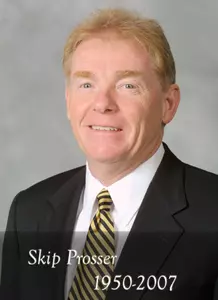
Recollections of Skip
7/26/2010 12:00:00 AM | Men's Basketball
July 26, 2010
Monday, July 26 marks the third anniversary of the death of Wake Forest head basketball coach Skip Prosser. In an article originally published last summer on the two-year anniversary of his death, WakeForestSports.com spoke with a number of individuals who shared their memories of that fateful day and their memories of Skip.
The following, in chronological order as that day unfolded, are those recollections in each person's own voice.
Mike Young, the head basketball coach at Wofford College, was watching a summer basketball tournament in Orlando. "We watched the late game together (Wednesday), a 9:30 pm game, just by happenstance, with Mark (Prosser) and Coach. The next morning, by chance, I watched the first game with Mark and said `where's your dad?' like we never left the gym. Sometimes you feel like you're (in the gym) night and day. He said his dad had to run to camp but would be back. He was down there watching Al-Farouq (Aminu)."
Geoff Lassiter, Wake Forest assistant athletic director for marketing. "I was in Atlanta, Georgia that morning, at the Crown Plaza in Buckhead. I was talking back and forth with Coach Prosser on his cell phone, making our daily plan. I was driving back to Winston-Salem and he and I were going to get on a private jet at 5 o'clock in Winston and fly down and see Al-Farouq Aminu play basketball. We were going to watch him play at the AAUs in Orlando and then come on back to Winston-Salem that night. I had several conversations with Coach that morning, just real spirited. The last thing he said to me was `Geoff, I'm going to give these campers one of my wonderful, spiritual talks about how to be successful in life, and the `do-rights' and the `do-wrongs.' He said `pick me up at 4:30 at the Miller Center.' And that was the last time that I got to talk to him. It was probably about 10 o'clock in the morning, maybe 10:30. He was actually calling me, and he was thinking about `who's taking us, what can I do for them, what shirt size do they wear?' He said `I'm going to bring a signed basketball, what else can I bring to thank the donor who donated the plane?'
Jason Eshbaugh, Wake Forest women's basketball director of operations. "It was a camp day and Coach Battle and I were on our way to lunch, going down the side steps (of the Manchester Center) to go to the cafeteria to eat with the campers. Skip actually walked out with us, down the stairwell. We were in the parking lot and he was talking about his recruiting trips and all the travel he'd been doing. He was stretching, getting ready to go run. And I'll never forget, we said `Coach, come with us, come eat, come sit with us.' And he said `nah, I've got to get my workout in.'
Brett Hickman, Wake Forest assistant athletic director for event management. "The guy goes out and runs a couple, three times a week during the summer. He was back, he was relaxed. I think he had just gotten back from being out on the road. He was in some of his most relaxed moods that you would see him in. He was running more often than I was. It was so hot."
Mike Muse, Wake Forest assistant basketball coach. "I saw Coach running on the track and said `Coach, it's awful hot out here.' And he wanted to know about the end of camp, wanted to meet, needed to know who's getting the awards, go over the names, `tell me how the staff's done.' Which was typical. He wanted to know everything. He was good about taking care of everybody who worked camp.
"I said `Coach, I've got to run up to the bank' because I was getting a check cashed. I was going to Las Vegas recruiting because (Pat) Kelsey's wife was pregnant. I was going to hit the road, go recruiting for three or four days, then fly back. I was flying out that night at 6 o'clock. I went to the ATM and was back in the office about five, six, seven minutes later. It couldn't have been much longer than that based on my cell phone records. Coach said he had one lap left to do and he'd meet me up in the office."
Mary Ann Justus, Wake Forest women's basketball administrative assistant. "I remember when he came in, there was a parent standing at my desk. As he walked in, they asked me a question about something related to camp. Skip answered the question and never stopped, just kept walking (back to his office). That was not unusual for him to just pipe in when he heard something."
Mike Muse "I came back and Mary Ann said `you might want to check on Skip, he didn't look good and he's awful quiet back there.'"
Mary Ann Justus "My recollection of how much time had passed is very confusing. There was nobody else in there except me. Mike (Muse) came in shortly thereafter. When Mike came in, I told him Skip had come in a little earlier and, as had been the case the last couple of years, he ran too much in the hot sun. We always told him that that was not a good idea. Of course, that day was very hot. When he came in, he didn't look good, as most people didn't when they came in from running in 90 degree weather. When Mike came in, I said `Skip is still back there, you ought to go check on him because he hasn't come out of his office.' He walked back there and just yelled out his name so I could tell he was yelling at him. He came to me and said `get to the phone and call 9-1-1.' Then he went to the training room."
Mike Muse "When I walked in, he was sitting on the couch and it looked like he was taking a nap, just resting. He still had color in his face. I yelled at him a little bit, `Hey, Coach.' He didn't move. The (news) paper was sitting on the couch next to him. I shook his shoulder and I could tell at that point that something was wrong with him. I did a quick check of his pulse and opened his airway to see if he would start breathing and of course he didn't. I got him on the floor and did four breaths, checked his pulse again and he had no pulse. I did 30 chest compressions and two more breaths. I knew the only chance we had was to get a defibrillator. I called out to Mary Ann to call 9-1-1. I knew I had enough time, since I had been breathing into him, to run and try and get some help. I knew the closest defibrillator was across the parking lot in Student Health Services. I told them we needed a defibrillator in Coach's office. I told them somebody wasn't breathing but I didn't say who.
"I saw (assistant athletic trainer) Scott Spernoga and I said `Scotty, I need some help.' He came up and helped me. He did the breathing and I did the compressions and we did that until they got there with the defibrillator."
Lynne Heflin, Wake Forest administrative assistant to the head basketball coach. "I was just coming back from lunch and I normally don't park in the lot on the side of Manchester. I saw Mary Ann Justus outside and she looked distraught.
"'It's bad.
"I asked `what's bad?'
"She said `Skip. Upstairs. It's bad.'
Jason Eshbaugh "We were over at The Pit and on our walk back, Coach Kelsey called Coach Battle, he was hysterical. `Get back here, something's wrong with Coach.'"
Craig Zakrzewski, Wake Forest men's basketball equipment manager. "I was going into Reynolds Gym when I saw the ambulance here, taking him away. I knew something was amiss. I touched base with Coach Muse and Pat Kelsey and they gave me the lowdown on what had happened."
Ishmael Smith, Wake Forest men's basketball player. "I was actually in a German class. A friend of mine texted me and said "is Coach okay?" I told him `yeah, he's perfectly fine, I saw him this morning.' They said they heard he got a little sick. As soon as class ended, Harvey (Hale) and I were headed to Benson Center to get something to eat. It was our daily routine. Then Mrs. (Jane) Caldwell called us and told us to come to Coach's office immediately. We saw the paramedics and the fire trucks. We figured it was some kid (in camp) that broke his arm or something. You have those kinds of injuries all the time at camp."
Brett Hickman "I noticed a lot of commotion out in the hallway so I got up to see what was happening and I saw they were wheeling him out on a gurney. After that, everybody was walking around, trying to figure out what was going on. (Associate athletic director) Dave Marmion came to my office and asked if I had the crisis management plan rough draft that we had just finished the week before. Dave said he had called Ron (Wellman) and told him what was happening and Dave was to take the lead."
Jane Caldwell, Wake Forest assistant athletic director for student-athlete counseling. "I was taking half a day of vacation to take my daughter to the mall to do some back-to-school shopping. I got a call from Mike Muse. He said `Jane, you need to get back to campus fast. I can't tell you what's going on, but I need you to get back to campus.' You know how you can sense when something is really bad?"
Dave Marmion, associate athletic director for internal affairs. "I was in my office, eating lunch at my desk. Mike Muse came running into my office. I can't remember exactly what he said, something to the effect that Coach has passed out, he's unconscious, call Ron (Wellman) and make sure he knows. I tried to get in touch with Ron who, I think, was in Virginia. I ran over and checked with (administrative assistant) Donna (Hall) and asked how to get in touch with Ron. She said to try his cell phone. I think I tried to call his cell and didn't get an answer.
"I called (associate athletic director) Barry (Faircloth) and I told him what was going on, that I was trying to get in touch with Ron.
"I went back to my office and the ambulance arrived shortly thereafter and I could see it from my window. I didn't realize it at the time but I had sort of started an internal clock. For some reason, I went back to Ron's office. When I first talked to Ron, they had not brought Skip out yet. I said to Ron `I don't mean to alarm you.' He said `just let me know if something happens.'"
Mike Muse "As soon as I knew what was going on, I went to Ron Wellman's office. I told (his office staff) there was a problem with Skip, he wasn't breathing, and that we were sending him to the hospital. I said they might want to get Ron on the phone, he was on vacation, to let him know what was going on.
Steve Adams, Wake Forest assistant athletics director for internal operations. "I had gone home to have lunch with my family when Brett (Hickman) called me and I immediately came back. Dave (Marmion) had called Ron (Wellman) and we were assembling the team. It was an odd day in that all of our upper administration was scattered throughout the country. Ron was on vacation in Virginia. (Associate athletic director) Dwight (Lewis) was on vacation with his family at the beach. Dave (Marmion) really was the senior-most person on site and really handled it exceptionally well. And that was shortly after we revamped the crisis management plan."
Jason Eshbaugh "By the time we got back, I intercepted a couple of the men's players and we funneled them to Jane (Caldwell)'s office. I was helping try and get in touch with some of the players. After that, it was just `what can we do to help?'"
Dave Marmion "I was looking out the office window and saw them bring Skip out. The ambulance had been here 45 minutes and I was thinking `they're not in there 45 minutes if this is going well.' I was talking to Barry (Faircloth) and I said `hold on, Barry, they're coming out right now.' And there were seven or eight people coming out with him and there wasn't much of a crowd."
Dino Gaudio, Wake Forest head men's basketball coach. "The first phone call I got was from Jeff (Battle). He said Coach had collapsed, they took him away in an emergency vehicle. He wasn't breathing at the time. I just started saying prayers. You just knew the next call was either going to be `they brought him back' or it wasn't going to be a good phone call. And I got that phone call from Pat Kelsey."
Mike Young "I'm motoring to another court about one o'clock, and I passed (Virginia Tech head coach) Seth Greenberg and (Cincinnati head coach) Bob Huggins. I know Seth well; Huggins, not at all. But Huggins, I assume, knew Mark (Prosser) had been an assistant coach for me (at Wofford). Both looked like they had seen a ghost. They asked me `have you seen Mark? Coach is sick. Something happened to Skip back in Winston.'"
Dave Goren, former sports director, WXII-TV, Winston-Salem. "I came out of the gym where I had been working out and I had two calls on my voice mail. The first one I called back was a guy who said `did you hear what happened? Skip had a massive heart attack while he was working out and he's in bad shape.' That was all he said. So then I immediately got on the phone to the TV station and said `I'm on my way, have you guys heard anything?' They said `we heard some rumors and stuff but we don't know what's going on.'"
Dino Gaudio "I remember I called my wife (Maureen) and I tried calling Mark because I was in Orlando and Mark was in Orlando. But we weren't in the same gym. I never spoke to Mark until I heard from Pat (Kelsey) that Skip had passed. And then I had to call Pat Flannery, who was the head coach at Bucknell, and he was with Mark. Then I spoke to Mark."
Lynne Heflin "I rode with Pat Kelsey to the hospital, we followed the ambulance. Dr. (Jim) Hoekstra found us a room, away from the waiting room. Somebody, a male, I can't even remember his face, came in and said `I hate to tell you, but he didn't make it.'"
Dave Goren "I got into work and I'm calling people that I know that might have a clue. I got a call back from one who said he had died. I talked to people at ISP who hadn't heard anything so I had no corroboration. In consultation with people at the station, they said `you need to get over to campus.' We were walking around behind the Miller Center and we saw some athletics people coming out. We were told `we really don't know anything.' Then we were moved out from the Miller Center to Wingate Drive. Then, it was playing phone tag. I kept talking to my people and basically confirmed in my head that he had died. But because Nancy didn't know yet, it's a basic courtesy, at least in the news business, to not tell the news until next of kin is notified.
"In the meantime, I'm getting pressure from `above' because FoxSports.com has reported he's dead and has comments from coaches in Orlando, talking about him being dead. I held out for as long as I could until it didn't make sense any more because it was already out there. It was a hard line to walk."
Andy Katz, Senior Writer, ESPN.com "We had just finished taping a show for ESPNU up on the concourse at the Disney Milk House. Skip had left earlier that morning. I originally wanted him to be on the show but found out he wasn't going to be there later in the day. The show went well and the coaches were just chatting off the set when someone, I can't remember exactly who, said they had heard Skip had collapsed due to a heart attack. Word started to spread that Skip's son, Mark, then an assistant at Bucknell, had sprinted out of the Milk House after receiving the news while sitting next to then Wake assistant Dino Gaudio and then Bucknell head coach Pat Flannery. Mark was said to have been shaken up. No one was quite sure what had happened. And then the news was grim. I was told Skip had died. But it came from a second source and it was one of those moments where you didn't want to believe that something so sudden could have occurred. I was in contact with his representative and was told that it was true, but they were waiting to alert Nancy, Skip's wife. This isn't the kind of story you want to be first. You want to handle something like this with dignity and of course delicately. As the news was confirmed, a cloud covered the Milk House. Coaches stood awkwardly around the perimeter of the court, staring, unsure of what to do. Virginia Tech coach Seth Greenberg said he couldn't be there anymore. He was just sick. None of it mattered. We were all in shock. I went to the airport for a flight, still numb as I went through the security line. Saint Joseph's coach Phil Martelli was on the phone and couldn't fathom that this had occurred. Every coach I saw or talked to before I boarded that flight wanted nothing more but to get out of Orlando, head home and be with their loved ones. Every coach's heart ached, their spirits were shattered, and they were in awe of the harsh reality that something so sudden, so tragic, could happen to any one of them. One coach told me, "It did. It happened to Skip."
Dave Marmion "We knew that word was getting out, not that he had passed, but that something had happened. I remember walking through the halls, keeping my head down and avoiding eye contact so I wouldn't have to answer anybody who asked `what's going on?"
Steve Adams "What was interesting to me was that I was getting texts and phone calls from the (ACC) conference office, from people I knew at Tennessee. The word had gotten out so quickly. We couldn't confirm or deny anything but the fact that people knew what had happened within 15 or 20 minutes."
Jane Caldwell "When I got back to campus, I came in the office and one of the tutors said `they have taken all of the men's basketball team and we need to study.' So I went over to the men's basketball office and they told me Skip had been taken away in an ambulance. All of the players were in an office. We sat there for a while and we didn't get much information. Some of the coaches came in and they were crying and I decided this wasn't good.
"I was out talking to some people in the hallway and we noticed some people were gathering outside of Manchester. I called my office and asked Ann Flynn and Sherry Long, and told them I needed them to get their cars and bring them over to Manchester and we let the guys come out the side door and we took them to my house. We got in the cars and nobody saw us and we came to my house."
Ishmael Smith "We came into the coaches office and we saw Coach Battle and his wife, Mrs. Battle, and she was consoling him because he was crying and saying `please don't let them take him away.' That's when my heart stopped. (I thought) What the heck is going on? We were just sitting in the office and we threw in the old Clemson tape from my freshman year. We were watching that and it was kind of light-hearted. We wondered what was going on and we figured it's not that bad. Then Mrs. Caldwell came in and took our cell phones away from us, just to verify so nobody would call looking for information. That's when we (were thinking) `this is a little deeper than we thought.' We still had no information as to what was going on. That's when Coach Battle came in again and he was crying and he's got his hands on his knees like he's tired. But he was crying and Mrs. Battle was rubbing his back and consoling him. When we saw that, we didn't know what was going on but Coach Battle doesn't usually say much but we knew something was wrong. A couple of the guys started crying, asking `is Coach Battle alright? What's going on?'
"Somebody came in and told us Coach (Prosser) is not feeling good so they rushed him to the hospital and we're going to see him later. All of a sudden, they put us in cars, Mrs. Caldwell's car and a couple of the ladies from (Academic Services). We went over to Mrs. Caldwell's house and when we were walking out (of the Manchester Center), there were three or four camera crews. We still didn't know what was going on. If you saw us on TV, you would have thought nothing happened because we had no idea what was going on. We knew Coach wasn't feeling well but we thought he'd feel better later on."
Brett Hickman "We went down and met with Dave (Marmion) and we decided not to release anything until we had a chance to talk to Nancy (Prosser). That was priority number one. We were thinking of who could we call that might know where she is? Who has a number for her family that she was going to visit? She was on the road. How do we call the highway patrol? We got a hold of the highway patrol, had her car description, her license plate. We didn't want (the news) going over the radio. The worst thing that could have happened was if she was driving and heard it on the radio. People left messages with all of her friends."
Steve Adams "(Wake Forest University Police) Detective (Jim) Rae was really involved. He had every sheriff, city, state law enforcement agency, toll booth operators from here to Cincinnati looking for Mrs. Prosser."
Brett Hickman "Dave called the first group of people together in the Turner Conference Room where we quickly talked about what was going on with the team, was the team good to go. They had all been called into a meeting at Jane Caldwell's house. She was keeping them there, feeding them, and they didn't know what was going on. They knew something was obviously going on but didn't know exactly what. They were all secure and guarded.
"We were still looking for Nancy but we didn't know what his prognosis was. We called Dan Ozimek, we tried to get in touch with someone at the hospital. Dan is the medical director for Forsyth County. He came down to (the) Turner (Conference Room) and told us that it was not looking good. That's all he really gave us at that time."
Ishmael Smith "We were sitting at (Mrs. Caldwell's) house for two or three hours. They brought pizza, burgers. We were hanging out, playing video games. Mrs. Caldwell did everything perfect. She did everything to keep us up and she did a great job. The way she handled that situation was unbelievable. Somebody else would've panicked but she kept us up. She was keeping hope alive."
Jane Caldwell "I took all their computers and cell phones and told them `you've got to trust me. This is what we need to do right now. We can't turn on the TV and see the news. We need to sit back and relax.' My mom went and got food from McDonald's and my neighbors brought them pizza. Then Mike Drum came into my house crying and said Coach Prosser had passed away."
Brett Hickman "We kept looking for Nancy, trying to get in touch with her. Then there was a bigger group of people (in the Turner Conference Room). Dan (Ozimek) called me out in the hall and told me (Skip) had passed. Then we went back in the room and told everybody that he had passed. At that time, everybody decided to say we didn't have any updated information yet. I think some other people found out through the hospital. Mary Ann was pretty distraught because she found out from somebody who was at the hospital. We had all clicked into response mode, athletic department mode, more so than emotional mode."
Geoff Lassiter "I was driving back and Barry (Faircloth) texted me and said `you need to know that Coach Prosser's gone to the hospital.' That's all he said in the text. With my relationship with Coach Gaudio, I immediately picked up the phone and said `Coach, what's going on?' At that time, Coach Gaudio told me that he had just died. I was driving down I-40 and I pulled over on the side of the road. It was a pretty tough drive from there. I got on the phone as I was driving and called everybody I knew that had private airplanes. I knew we were going to be in an operational situation to help with the family, to help with our coaching staff."
Jason Eshbaugh "I can still remember being in that side hall with the men's staff and Mary Ann (Justus) and we were right there at the hospital when it all happened. A couple of (people) had gone with the ambulance and Jane and myself followed after we had made sure all the players were taken care of. By the time we got there, we had our own little room, tried to keep away from the press. But word got out pretty quick.
"(He had passed away) right when I walked in. You could tell by everybody's reaction and the emotions. It wasn't easy. But my big concern was trying to help Coach Battle, a good friend of mine. His mentor, basically his dad, was gone. That was my main issue."
Dave Goren "We broke in (to regular programming) first to say that he had collapsed after working out. I don't remember exactly what time it was but I would say it was probably around 3 o'clock. I didn't go back to the office until after the 6 (o'clock news). We were stuck on the side of the road with nobody to talk to in-person. My intern had her laptop so she was getting some information off the internet. I was making phone calls to anybody I could think of."
Brett Hickman "It was all pretty much a shock. Because of what he meant to me (as one of his former players). It was shocking but we all shifted into athletic department mode: look after the student-athletes, his wife, comfort the people that need to be comforted. We were trying to figure out what to tell the rest of the staff. We started going into the rest of the crisis management stuff. We discussed where would we hold the meetings, when would we put out the press release.
"It was a weird coincidence that we had finished the crisis management plan a week before something like that happened."
Mary Ann Justus "It was crazy (in the office). The phones started ringing shortly thereafter. It was very uncomfortable because we were told `this doesn't leave this office.' So I was the one answering the phone and people are asking me to confirm things. I couldn't confirm anything because I had been told not to do that. There were people from the community calling, basketball office secretaries from other schools were calling. It was pretty crazy there for a while. It was amazing how quickly the news spread and, of course, then the news people started calling. It didn't take long for it to become huge."
Mike Muse "We went to the hospital and that's when we found out. They rushed us into this room and we sat there. Lisa Kelsey was already there and Joyce Battle was already there. I think Maureen Gaudio was already there. I think they had already been told when we walked in. We had suspected that."
Mike Muse "The players were all in the living room and (Jane Caldwell) had food and her neighbors were bringing food over. The kids knew something was going on because we took their cell phones, got them away from where anybody could contact them. One of the most vivid memories I have is Josh Howard coming on campus and I met him outside the (Turner) conference room down on the first floor of the Manchester Athletic Center. He was banging on the door, trying to get in because the door was locked. I let him in and he said `tell me it's not true, tell me it's not true.' And we just grasped each other. That's a moment I'll never forget. Eric Williams came by to see what was going on. That was an emotional time."
Walt Corbean, Wake Forest director of basketball operations. At the time, Corbean was the head basketball coach at the University of Indiana-Southeast. "Our gym (at IU Southeast) was having the floor refinished so we used another facility for camp. We had to transport all the balls, coolers, and stuff, every morning and every afternoon. We had just finished camp and I went back to school, got a truck from the physical plant, and I was on my way to pick up some things at the complex. I got a phone call from a former player at Northern Kentucky (Ryan Schrand), who said `Did you hear the news?'
"I said `what news, what are you talking about?'
"He said `Skip died.' I said `get out of here.'
"I went in and looked at a computer, at ESPN.com, and it wasn't on there. I called (former Xavier teammate) Byron Larkin and he said `it's true.' Then I immediately called Dino and I believe Dino was with Mark (Prosser) on his way back to Winston-Salem. Needless to say, it was a long night from that point on."
Craig Zakrzewski "We kind of decided then to finish camp and put on a good face for camp. And then once camp was over, that's when it hit. The team was gathered up in the office. Then I went over to the hospital with the staff and found out at that time that Coach had passed. We finished camp not knowing he had passed. We knew he was at the hospital. We wanted to believe the it would be okay, he'll come out of this. We knew it wasn't good and put on a brave face for everybody. Coach Muse did a great job finishing camp because that's usually Coach Prosser's thing, he gives a speech at the end of camp. People were wondering `where's Coach?' and we tried to not say too much but we knew it wasn't a good situation."
Mike Muse "I was the camp director at the time. I got as many camp coaches together as I could. I told them `Coach will not be here the rest of the day, he's taken ill. We need to finish camp.' We got the players sequestered and I got the camp coaches and told them to make sure they were doing everything we needed to do.
"Probably one of the hardest moments of my life was doing the speech that Skip usually does, and refereeing the final game, knowing what I knew. But auto-pilot kind of took over. That's what Coach would've wanted. Then, after camp, the players got taken to Jane Caldwell's house and the coaching staff, and our wives (went to Jane's house).
"(Men's soccer coach) Jay Vidovich and his staff were unbelievable in helping us shut camp down so we could get out of here. They picked up the ball and ran with it, helped check out our campers for us."
Jane Caldwell "The guys started to get real antsy and some of them went into different rooms where they were crying. I said `Guys, we have not heard anything official. We need to wait until we hear something. Then (University chaplain) Tim Auman showed up at my house and I said `Guys, this isn't looking real good for us.' Then Ron and all the coaches came over. It was very emotional. He said it was really sad, that he had passed away, and he was so sorry. The guys were weeping and it was just hard."
Ishmael Smith "(Mrs. Caldwell) said `guys, the coaching staff and Mr. Wellman are on their way.' That's when they came in and officially told us that Coach had passed away from a heart attack. That's when it really hit us.
"(Mr. Wellman) started out saying, `guys, is everybody okay? It's been a crazy day today.' `He said `we've lost a great leader and a great coach and a great character guy in Coach Prosser. He passed away today from a massive heart attack.' And that's all I heard. My head was down in my lap. I started crying and you could hear the guys crying and you had some blank stares from Gary (Clark), James (Johnson) and Jeff (Teague). You could hear them thinking, `so this is what my freshman year is going to be like?"
Jane Caldwell "It was so emotional when (Ron) spoke. It was very brief. He didn't talk very long. Then Tim Auman said a prayer. It was such a difficult time. They knew what was happening but when they heard it from the athletic director, it was such a big moment."
Geoff Lassiter "As I drove back to Winston, I found out that Nancy was en route to Cincinnati, driving. Of course, Nancy didn't have a cell phone. So I stopped at one of our great donor's houses, Ken Budd, and I said `Ken, I need some help.' We sat at Ken's house for a few minutes and gathered our thoughts. Ken's family owns a couple of King Airs. He called his pilot and he called his uncle, Richard Budd. I went on to the airport directly to meet with Richard and Ken. The donor who had donated the airplane for Skip and I to travel to Orlando that day was gracious enough to re-direct his plane to Orlando to pick up Mark Prosser and Coach Gaudio, to get them back to Winston-Salem. We tried several different lines of communication to Nancy. I talked with the nursing home that her grandmother was in. We thought that's where she was going first. I talked to a couple of her local friends and one of them was the first to touch base with her. Debbie Brenner was the first one to talk to her.
"After she had gotten to Cincinnati and there were several voice mails of condolence and she didn't really know what was going on. I can remember us talking to Nancy at the house in Cincinnati because I called Ron and said `Ron, call her right now at this number.' And Ron called directly to her house in Cincinnati. I stayed at the airport. By this time, we told Nancy we would send a plane for her. Maureen Gaudio joined me at the airport and we were there when Coach Gaudio and Mark arrived. Amanda Budd, who was a friend of Nancy's, and the wife of Joe Budd, and Joe was the owner of one of the Budd airplanes. Joe Budd flew co-pilot with their pilot and Amanda and Maureen accompanied Nancy back to Winston-Salem."
Dino Gaudio "The next thing I remember is Mark and I being at some private aviation location, just him and I for several hours. One of the Wake Forest alums sent a plane down to pick us up. They had to arrange for the plane, fly the plane from Winston to Orlando, then we flew back home.
"Mark was just like Skip would be. Very stoic, composed. He cried but however long we were down there together, three, four hours, he made phone calls, I made phone calls. At no time was he ever emotionally out of control. And that's just the way Skip would have been."
Jane Caldwell "I remember how much of a family it felt like. They were hugging each other. Everybody was so supportive. You'd figure out who needed the most help and you'd be with them. I said `Guys, go finish off the food' because they were leaving to go to Chris Paul's house. I said `I know some of you didn't get a chance to eat, so make sure you get some.' That night when I went to bed, I looked in the pantry and the refrigerator and it was wiped out. They took me literally, there was no food left. So Maureen Gaudio and Lisa Kelsey came over and I said `let me get you something to eat' and that's when I realized I had no food, I had been wiped out."
Dave Goren "I believe it was after we finished the six o'clock that I ran into (former Deacon player) Kenny Herbst who was coming out of his office. (We) got some good, heartfelt comments because he talked about Skip wanting to include all the former players as much as he could and how much he respected that. He gave some really emotional, heartfelt comments. On TV, we look for emotional stories because that's what makes the connection to the viewer."
Geoff Lassiter "It was probably after Coach Gaudio had arrived (at Smith Reynolds Field), and we put Maureen on the plane to go get Nancy. Dino and I came over (to Manchester) and Dino met with Ron. I stayed with Dino the whole time then we actually went to Arbys, I can't remember why, to have a little dinner."
Brett Hickman "Steve Adams called Russ (Hundley) and JO (James Overstreet) and we set up the Snead Room (at Bridger Field House for a 9 o'clock press conference) based on what was in our plan. We had just talked to those guys the week before. Steve made one phone call and those guys were able to get it ready. We were able to get it done because we had just had those conversations."
Steve Adams "I couldn't believe how composed (Ron) was. We went in the East Vehicle gate and went in through the (football) locker room so we could go upstairs without the media seeing Ron before the press conference. That kept Ron away from the media. He went upstairs and went in the Moricle Society Room where Linda (Wellman) and the chaplain were. We briefed him on some statements. That whole time he was remarkably composed."
Dave Goren "We went live at 11 from the parking lot by Bridger. Both Cameron Kent and I were out there. I just remember wanting to get through it. It was almost like I wanted to go home and bury my head in the pillow because you get to know a person pretty well after five, six years. He was always good to me. He wasn't just somebody you covered, he was somebody you knew, somebody who was part of the community. We worked a couple of `Fur Balls' together. I remember the night of the Wake-Nebraska football game in Lincoln, he and I kept sneaking downstairs where the TV was, to check out the game. It was a hard day, a hard week."
Geoff Lassiter "Dino and I went to the airport to meet (Nancy) along with Ron and Linda (Wellman) and Richard Budd who was the one who donated the plane. Rex Welton, one of Nancy's really good friends, was there as well. When Nancy came off the plane, she had Abby, their dog, with her. And Nancy's mother. We loaded up the cars and I escorted them over to Baptist (Hospital) and we went and visited with Skip that evening. I pretty much stayed outside. But Maureen and Dino and Nancy and her mother went in and visited with Skip at that point.
"I took Nancy and her mother to her house and was with them until they got settled in that night. Then, of course, all the craziness started the next day. We arranged for another private plane to go and get Mrs. (Jo) Prosser (Skip's mom) and Skip's sister and (Skip's son) Scotty from Wheeling. They got there about lunch time the next day to Nancy and Skip's house.
"It was kind of like an out-of-body experience. I got home about 2 am and got about three hours of sleep. At 5, I was back up. I know we had a couple of things to take care of. I was probably over at Nancy's house by about 8 am the next morning to give her the plans on when other family members were flying in. I went over and got them at the airport about midday. And I went over that morning and saw Mark Prosser at the Marriott.
"That next day was really, really busy. Mark didn't have any clothes with him. We had a donor who owns a men's store who was graciousness enough along with a couple of other donors to fully clothe Mark so that he wouldn't have to leave (to get clothes). I took Mark around and got him a suit and everything for the funeral."
Mike Muse "The next morning, when I came into work, is when it hit. I went in the office and I just got overcome with emotion. I had been fighting it. You've been on auto-pilot and you were trying not to think about it. We got camp finished and we were trying to take care of our guys.
"I had to walk to the back of the office and I looked in Coach's office and everything was a little bit out of place. We put things back in place and then I just had to take a walk. I walked up to the business office and gave them the money back because I wouldn't be going recruiting. My faith took over at that point. I just walked around, looked at all the toilet paper on the Quad that was thrown in the trees for Coach, and the signs. I started reading them. When I got to Wait Chapel, I couldn't go on. That's when I broke down. I was going into the chapel to say a prayer but when I got to the steps, I just couldn't make it. After about five or 10 minutes, I finally got up and went in the chapel and prayed. I came out and got myself together and was able to resume. Those days are kind of a blur now. Meal, funerals, here's what we've got to do, here's where we're going. It wasn't about the program at that point, it was about taking care of each other, making sure we did everything the right way."
Mike Young "My first thoughts were of Mark and Scotty (Prosser), two guys I think a lot of. Then, like most people, you reflect on his contributions and what he meant to so many people. How short this life is and what a terrible, terrible loss for a lot of people. He was a beautiful man. He was too smart to be a basketball coach. Not the least bit pretentious. Just a guy, just a great guy."
Brett Hickman "(That night) I was getting in touch with teammates. I called Steve Lepore, made sure he knew. I called the guys and let them know they could come and stay with me. Steve wound up coming and staying for the funeral. Vytas Danelius came back and stayed so we were trying to figure out who would be able to come and where guys would be staying."
Steve Adams "There were a lot of good decisions made by a lot of individuals on many levels. You wonder how people will react in the moment. It was adrenaline, it was instinct, it was all those things that kicked in."
Ishmael Smith "Today (July 23) I had to coach a camp team because one of the camp coaches had to leave. And Coach Gaudio was reffing. And I said, `wow, the last time I was in this position . . .'"
Geoff Lassiter "(Skip) had always driven me and tested me, and talked about your drive in life. That's what kind of pushed me through that process for the first day and a half. He would tell me to love my wife, and love my job and not get tied up on the wrong side of the street. But you don't recall all that until he's gone.
"Skip and Nancy had been asked to escort a trip to Ireland and there were about 45 people on the trip and (my wife) Kiera and I were fortunate enough to be able to go along. One night, it was a slow night, there weren't any special events. Frank Turner and I went down to the most common bar in Ireland, with Irish music and smoke and it was just that Irish feel. It was something that Skip always had, a feeling of being a common person, not a superstar basketball coach. He never wanted to carry that persona. I remember walking into that bar and having a beer and looking over in the corner and Skip was there reading the newspaper. Just blending in with normal, plain-old, blue collar people. That is a valuable lesson that I'll never forget. It doesn't matter who you are or what you have, that everybody you meet should be treated equally."